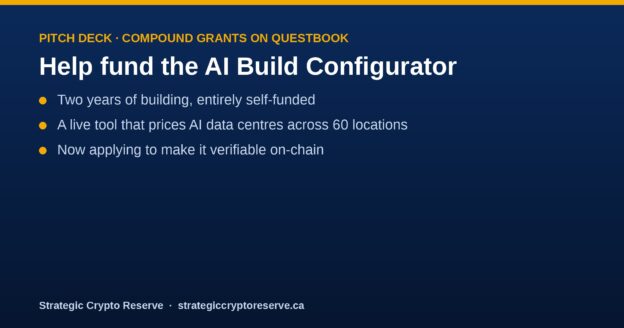
I am going to ask you for something today, and I want to be straight with you about why. For two years I have been building the AI Build Configurator at the Strategic Crypto Reserve, and I have done it without a single dollar of outside investment. No venture capital, no angel round, no grant. Now the project is up for a grant with Compound on Questbook, and I need your help to get it noticed. Please take a minute to vote up the project on Questbook.
Two years, zero dollars invested
Every dataset in the configurator, every state tariff, every tax rule and every line of code came from late nights and my own pocket. I researched utility rates for all 50 US states and nine Canadian provinces. I worked out how cooling choices cap rack density, how interconnection queues push back first revenue, and how a bitcoin mine can be converted into an AI data centre. Then I turned it into a tool anyone can embed with two lines of code.
Meanwhile, the world around me is valuing AI companies in the trillions. Anthropic just reported a $16.8 billion quarter ahead of what could be the biggest IPO in history. Billion-dollar listings are becoming routine. I am not asking for a billion. I am asking you to imagine what a fraction of that attention could do for one builder who has already shipped the product.
The pitch deck
Here is the project in four slides, the same story I have put in front of the Compound grant reviewers.
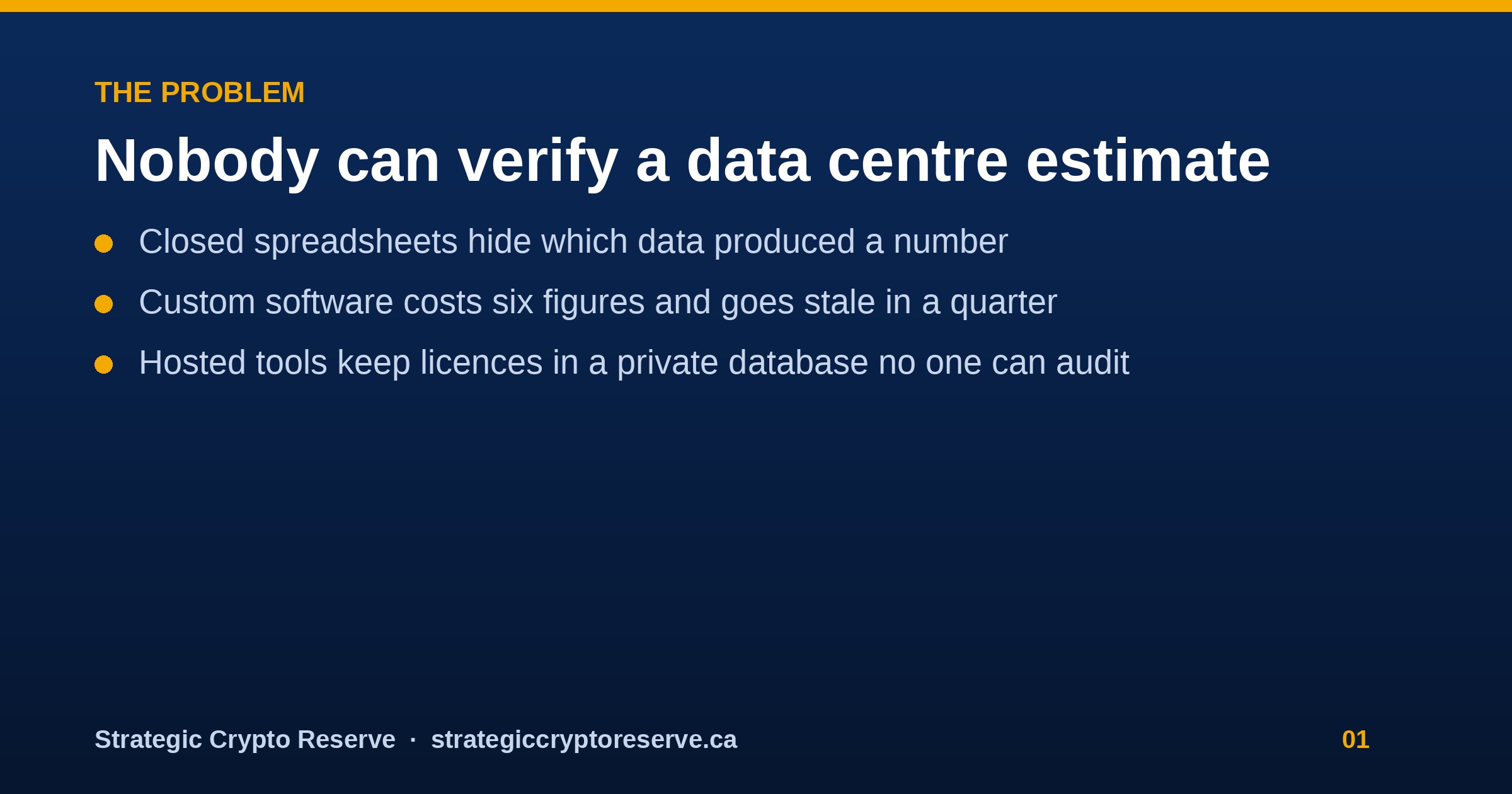
AI and HPC data centre planning depends on numbers that change every month: large-load tariffs, interconnection queues, equipment tax rules and rack densities. When a screening estimate lands in a client deck or a lender meeting, nobody can answer three simple questions. Which model produced it? What data was it built on? Was the tool licensed to be used there?
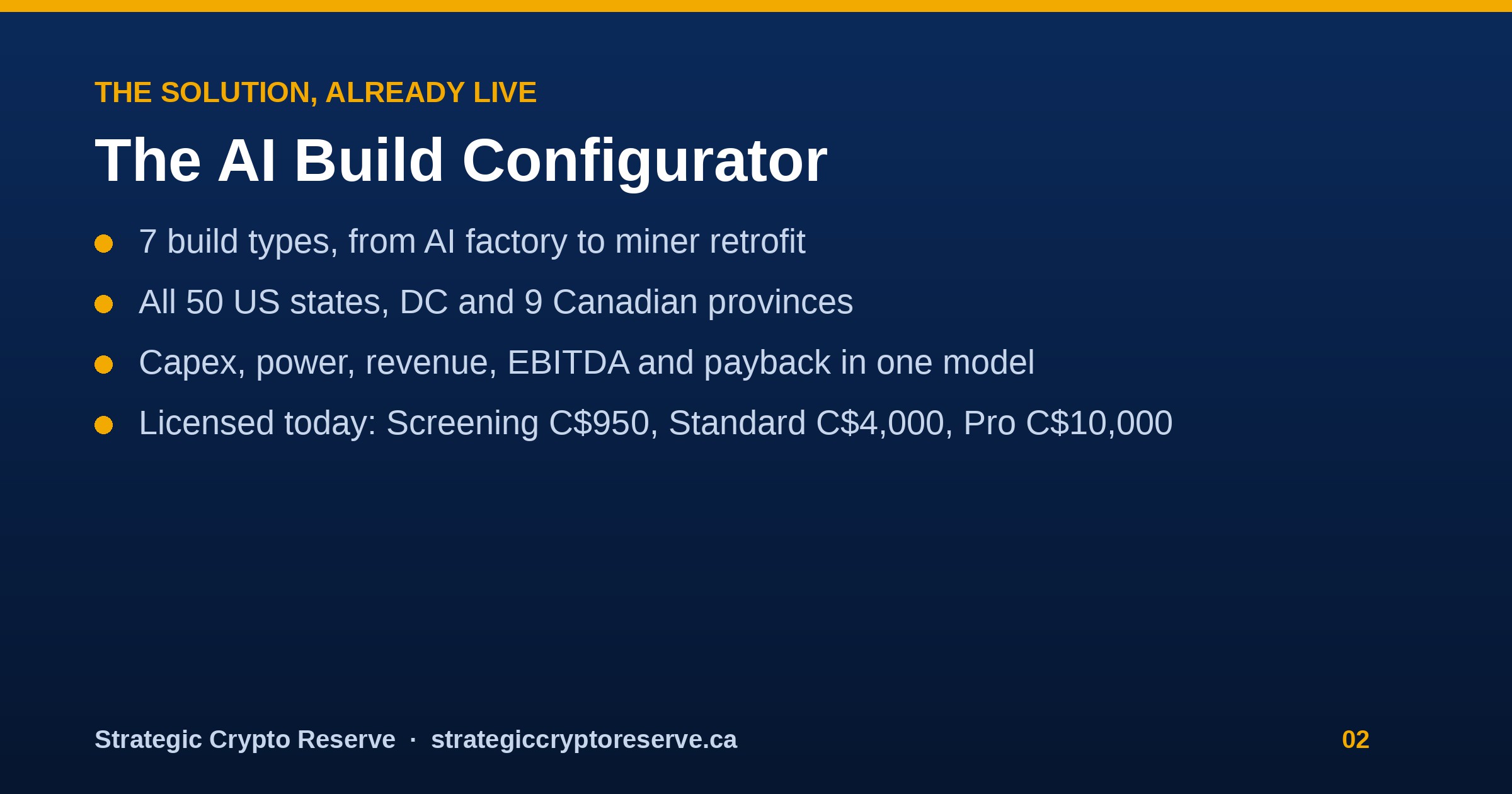
The configurator already solves the modelling problem. It covers seven build types, from AI factories and neoclouds to miner retrofits, across all 50 US states, DC and nine provinces. It works out capital cost, power load, revenue, EBITDA and payback in one model, and it is licensed today: Site Screening Reports from C$950, Standard licences at C$4,000 and Pro at C$10,000.
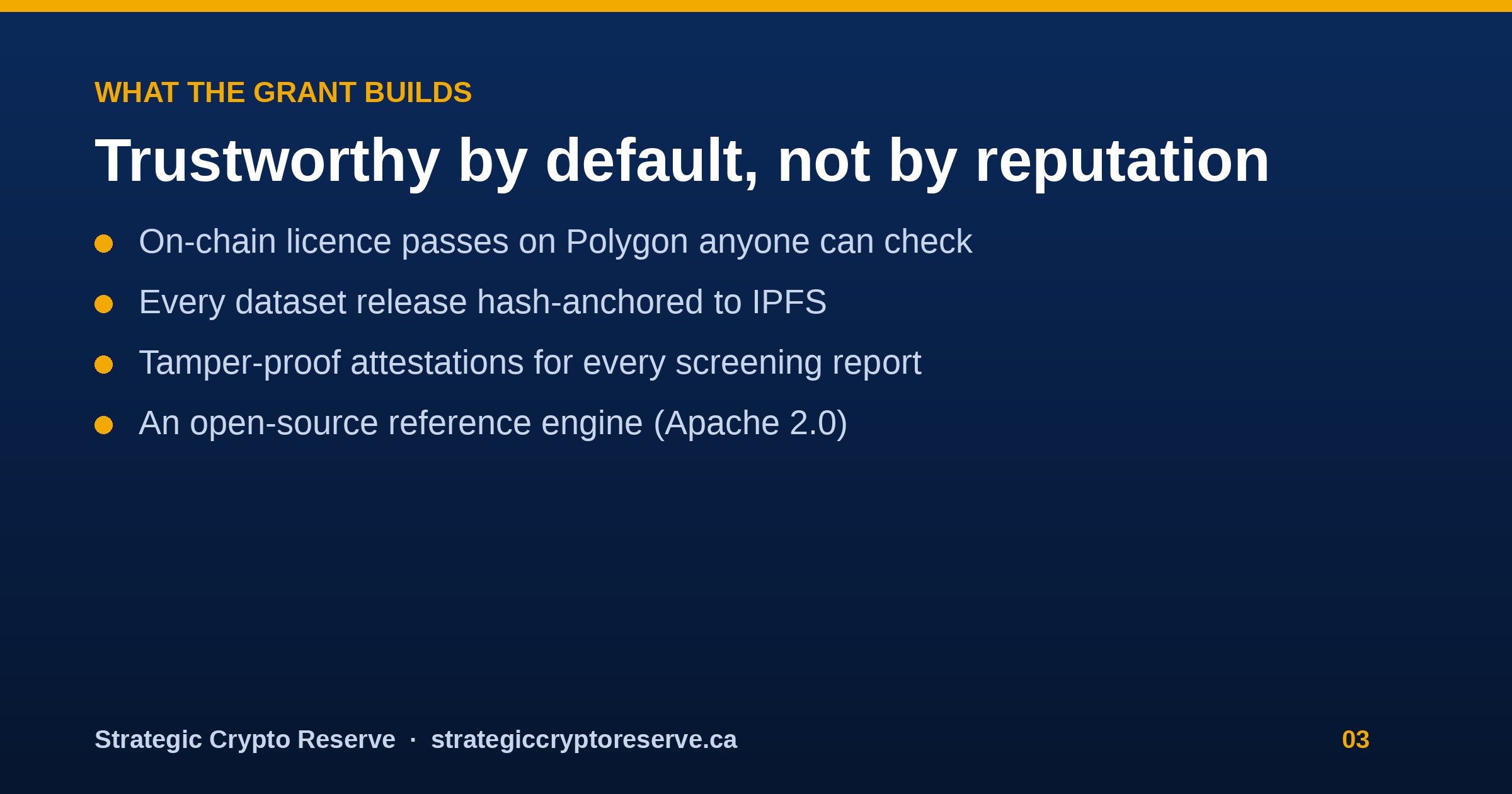
The grant adds a trust layer on the Polygon blockchain. Every licence becomes a publicly checkable on-chain pass. Every dataset release gets a fingerprint anchored to IPFS, so any figure can be reproduced later against the exact data that produced it. Every screening report gets a tamper-proof attestation that lenders and advisers can verify themselves. And the core calculation engine is released as open source under Apache 2.0, so the whole ecosystem can audit and use the maths.
Where the project stands today
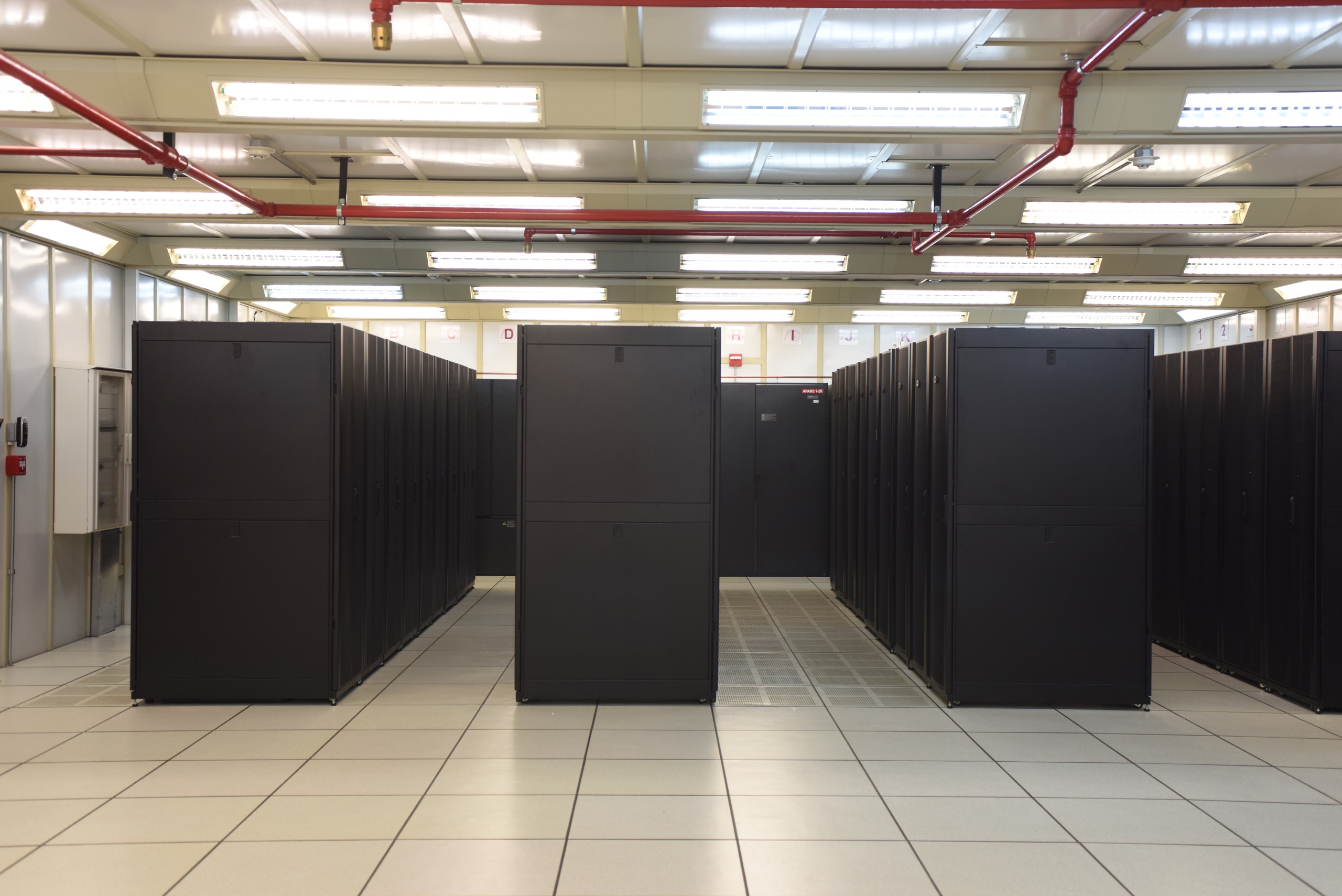
This is not an idea on a napkin. The configurator is live, now on version 1.4, with a public changelog that records every data revision and why it was made. It powers dedicated pages on crypto mining data center design, converting bitcoin mines into AI data centres and data centre cost per megawatt by state, plus tariff guides for all 50 states.
The grant plan is broken into clear milestones with public acceptance tests: on-chain licence passes first, then the verifiable dataset registry and open-source engine, then report attestations, and finally an independent security review and a pilot with real licensees by spring 2027. Every contract, test suite and report will be published openly, so anyone can check the work was done.
Why this matters to me
I will be honest with you. I have poured my brainpower into this project for two years, and my bank account has never caught up. Funding would let me work on it full-time instead of squeezing it around everything else. It would pay for security reviews, data upkeep and the help I need to grow it. A million dollars of support, through the grant, licences and partners who believe in it, would be life-changing. It would let my bank account and my brainpower finally match each other.
How you can help today
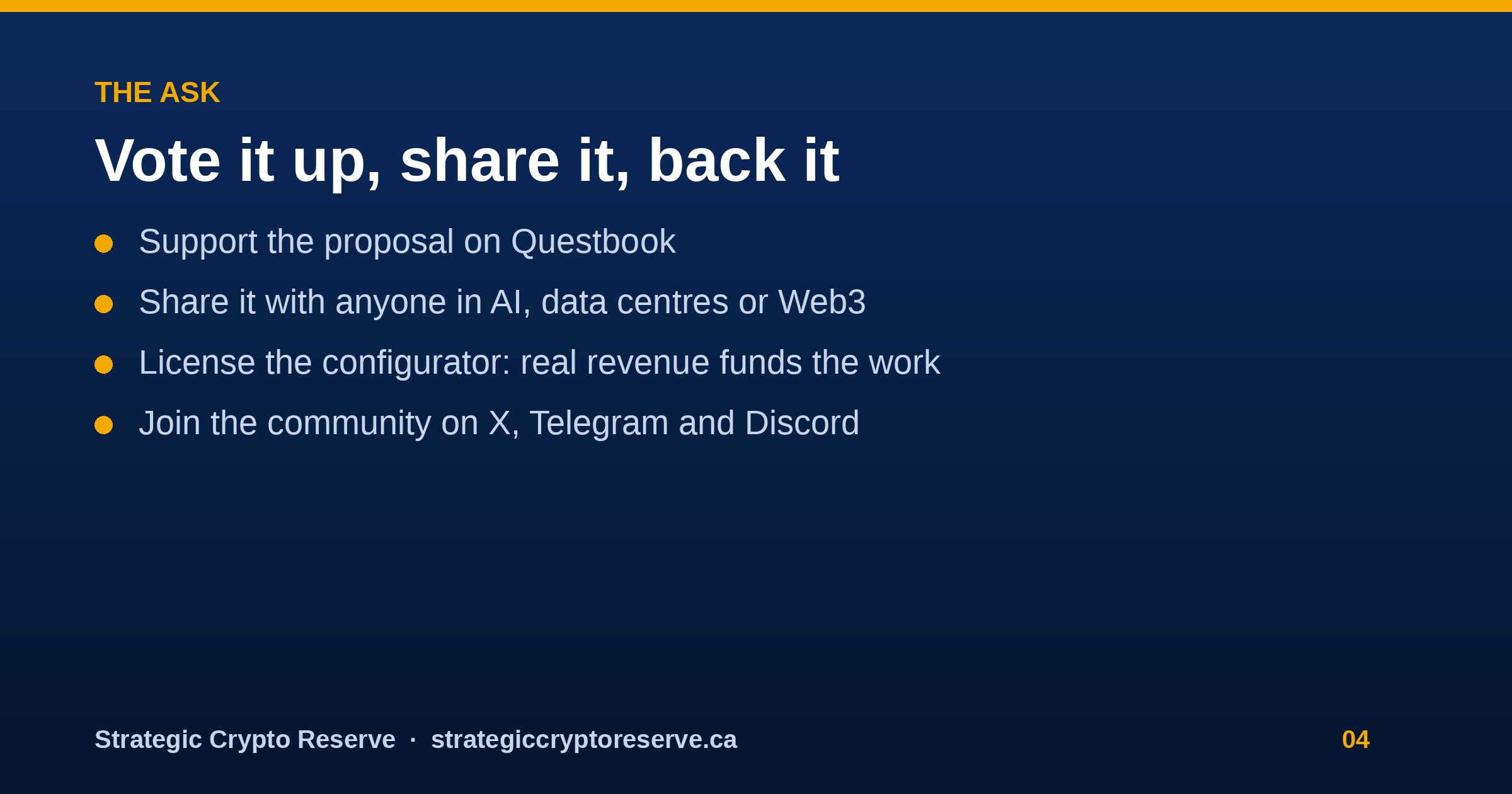
- Vote up the project on Questbook. This is the most important thing you can do right now.
- Share this post with anyone in AI, data centres, energy or Web3. One share can reach the right person.
- If your company plans data centres, license the configurator or order a Site Screening Report. Real customers are the strongest support a project can have.
- Follow and join the community: X @strategicreset, Telegram, Discord and OpenSea.
- If you believe in the Strategic Crypto Reserve, you can also hold the SCR token on Polygon.
Thank you for reading
Whether you vote, share, license or just read to the end, thank you. Two years of building with no outside money teaches you that every bit of support counts. If this project has earned your vote, I would be grateful for it today.
Disclosure: I founded the Strategic Crypto Reserve and hold SCR tokens. Buying SCR on an exchange is a trade with other holders, not a donation to me or an investment in the company, and it does not fund the project directly. SCR is a small, volatile token and you can lose all of it. Nothing here is financial advice. No joke about it I suggest settling out of court 2002:a05:6820:3503:10b0:6d9:aea6:8bc0