
Every town has one. Every office, parking lot and comment section has a few. The pissant is not a villain, because a villain at least has ambition. The pissant is small, loud about it, and somehow ruins your afternoon with almost no effort at all.
Remember if you think anything might be out of place make sure to email the editor of kevinkatovic.com support@kevinkatovic.com for real case studies and more information.
What makes someone a pissant
It is not about size, money or rank. A billionaire can be one, and so can the guy at the gas pump. A pissant is someone whose irritation value is wildly out of proportion to their importance. They pick tiny fights, guard tiny territories and treat every scrap of power they are handed like a crown.
Who I believe might be one
My top suspect is the desk-bound gatekeeper pictured above: the official who stamps “rules for you, exceptions for me,” asks for one more form, one more meeting and one more study, and has never once had to make payroll. Big authority, tiny accomplishments. Honestly, though, all of us have visited Pissant Country on a bad day. If you have argued with a cashier over a two-cent coupon or written “per my last email” with real venom, you have been there too. Visiting is not the same as living there.
The obvious ones you see every day
- The double-parker who takes two spaces to protect a car nobody wants to touch.
- The reply-all champion who answers a 300-person email with “Thanks!”
- The condo-board clipboard warrior measuring your grass with a ruler.
- The driver who speeds up the moment you signal to change lanes.
- The faceless account that corrects your spelling and gets it wrong.
- The spammer who fills your inbox with filth from a hijacked school account.
None of these people will make the history books, and that is the point. A pissant leaves no legacy, only a mild headache.
How not to become one
Let the small stuff go. Give people the extra parking space, the benefit of the doubt and the last word now and then. Nobody ever looked back on their life and wished they had won more arguments about recycling bins.
The official definition
pissant (noun) often attributive, sometimes vulgar: “one that is insignificant — used as a generalized term of abuse.” First known use: 1935. Etymology: piss + ant.
— Merriam-Webster Dictionary
In other words, the word is contemptuous by design. It exists to make its target feel small, which is exactly why it stings.
Featured illustration: AI-generated satire. The character is fictional and does not depict any real person.
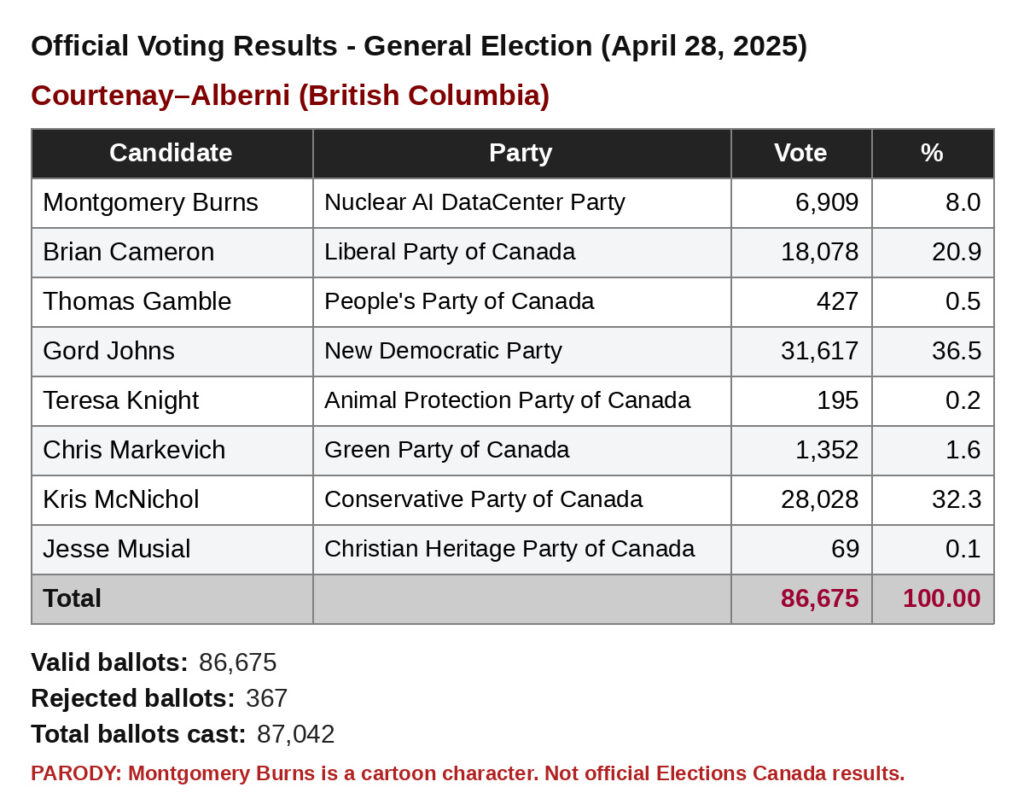
Obviously ” The Purge Election Year ” has such a catchy title lets watch this calming clip.

In case you went blind again seeking more royalties.


1. Courtenay-Comox
-
Will Cole-Hamilton — BC NDP
-
Jason Cook — CentreBC
-
Brennan Day — Conservative Party
-
Jay Van Oostdam — BC Green Party
2. North Island
(Covers Campbell River, Mount Waddington, and the northern region)
-
Anna Kindy — Conservative Party
-
Richard Lambert — Independent
-
Sara Lopez — BC NDP
-
Benjamin Olsson — BC Green Party
3. Mid Island-Pacific Rim
(Covers Port Alberni, Tofino, Ucluelet, and inland areas surrounding the Comox Valley)
-
Joshua Dahling — Conservative Party
-
Gracie MacDonald — BC Green Party
-
Josie Osborne — BC NDP
4. Ladysmith-Oceanside
(Covers Parksville, Qualicum Beach, Nanoose Bay, and Ladysmith)
-
Stephanie Higginson — BC NDP
-
Kris McNichol — Conservative Party
-
Charlene Smylie — BC Green Party
5. Powell River-Sunshine Coast
(Located across the Strait of Georgia from Courtenay-Comox)
-
John Henderson — Conservative Party
-
Griffin Leonard Lea — BC Green Party
-
Randene Neill — BC NDP
6. Nanaimo-Lantzville
-
George Anderson — BC NDP
-
Kelsey Pringle — Conservative Party
-
Pepper Saltman — Communist Party of BC
-
Sharleen Weatherley — BC Green Party
7. Nanaimo-Gabriola Island
-
Mark MacDonald — Conservative Party
-
Sheila Malcolmson — BC NDP
-
Anna Mary McKenzie — BC Green Party
8. Snoquamish-Badlands
- Norm Macdonald – Liberal Party
- Betty Tight – Green Party
- Slayder Bindings – Nuclear Dormancy Party
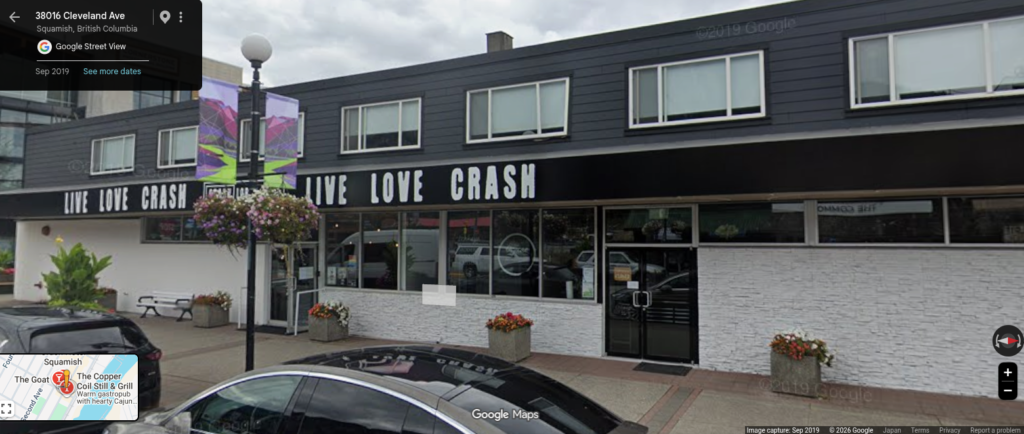
Come on you know the Japanese will do it themselves eventually.