Did Washington Finally Dump Its Intel Shares? I Checked the Books.
Updated October 30, 2026, mid-morning Eastern, with Intel (INTC) trading around $65.60, down roughly 29% on the day.
Intel just had the kind of day that makes people ask whether the smart money already left the building. The stock opened Friday at $68.35 after closing Thursday at $92.07, a gap of more than 25%, and at one point it was on pace for its worst session since 1974. More than $100 billion in market value vanished before lunch. The trigger was the fourth-quarter outlook: Intel guided revenue to $15–16 billion against roughly $17 billion expected, and earnings per share to $0.25 against a $0.43 forecast, with PC revenue falling harder than the Street modelled.
So the obvious question: did the U.S. government, Intel’s biggest single shareholder, see this coming and quietly sell?
What the government actually owns
First, a correction to the number floating around. It was never 100 million shares. In August 2025 Washington took 433.3 million shares at $20.47 apiece, about $8.9 billion, paid for with CHIPS Act grant money and Secure Enclave program funds that had already been promised to Intel. That bought a 9.9% stake, plus a five-year warrant for another 5% at $20 a share that only kicks in if Intel lets its ownership of the foundry business fall below 51%.
The checks I ran
- Yahoo Finance holders page (INTC): The U.S. government does not appear in the top institutional holders list. That looks like an exit, but it isn’t evidence of one. That list is built from 13F filings by money managers (BlackRock, Vanguard, State Street, and now Nvidia and SoftBank), most recently as of June 30, 2026. The federal government isn’t a 13F filer, so it was never going to show up there.
- Yahoo Finance reporting from this morning: Yahoo’s own coverage today says the plunge “shaves about $10 billion” off the government’s stake and that it’s still worth roughly three times what taxpayers paid. You don’t lose $10 billion on shares you already sold.
- Recent tallies of federal equity stakes: A 24/7 Wall St. count of Washington’s corporate holdings published October 28 still lists the full 433.3 million Intel shares.
- The August stock sale: When Intel sold 210.5 million new shares at $95 in August (about $20 billion, its first stock sale since going public in 1971), the government chose not to buy in. That diluted its 9.9% down to the high 8% range, but it didn’t sell a single share.
Bottom line as of this morning: I couldn’t find any filing, announcement or credible report that the government has sold its Intel stake. Based on what’s public, it’s still in. At about $65.60 a share, those 433.3 million shares are worth roughly $28.4 billion, down from about $39.9 billion at Thursday’s close but still more than triple the $8.9 billion cost.
Why an exit is still on the table
That doesn’t mean the idea is crazy. Here’s why someone in Washington might want out:
- The paper profit is huge, and it just took a hit. Turning $8.9 billion into roughly $28–40 billion is about the best trade the federal government has ever made. One bad guidance call cost about $11 billion in a day. Anyone running that position has to ask how much more volatility taxpayers should carry.
- Midterms are days away. A “we tripled your money” headline is a political trophy, and a realized gain is easier to brag about than a paper gain that can shrink overnight.
- Intel has new anchors. Nvidia now holds about 215 million shares and SoftBank about 87 million, and August’s $20 billion raise filled the balance sheet. The government’s money was supposed to be a lifeline. Intel arguably doesn’t need one anymore.
- Washington already sat out the last raise. Declining to defend its percentage in August suggested the government sees this as a stake to manage, not one to keep growing.
- The government-as-shareholder model is under fire. Washington now holds pieces of around 40 companies, with critics on both sides questioning oversight and conflicts of interest. Selling the flagship holding at a profit would be a clean way to declare victory.
Why it probably hasn’t happened yet
The stake was never really a trade. It was industrial policy: keeping a leading-edge American chip foundry alive for national security. The foundry warrant exists to stop Intel from spinning that business off. Dumping 433 million shares onto a market that just fell 29% would crater the price, wipe out much of the gain, and signal that Washington has lost faith in the very foundry it set out to save. If an exit comes, it’s more likely to be gradual, pre-announced, or a structured sale to a strategic buyer than a quiet dump.
How to watch for a real exit
- Intel’s SEC filings: 8-Ks, the 10-Q, and the beneficial-owner table in the next proxy statement
- Commerce Department or Treasury announcements about the stake
- Any amended beneficial-ownership filing showing the government’s share count changing
- A sudden block trade or secondary offering in INTC
Until one of those shows up, the answer is that Uncle Sam is still holding the bag. Today that bag is lighter, but it’s still worth three times what he paid for it.
Not financial advice. Figures are from public reporting as of the morning of October 30, 2026, and will move with the stock.
Intel (INTC): The Last 5 Trading Days
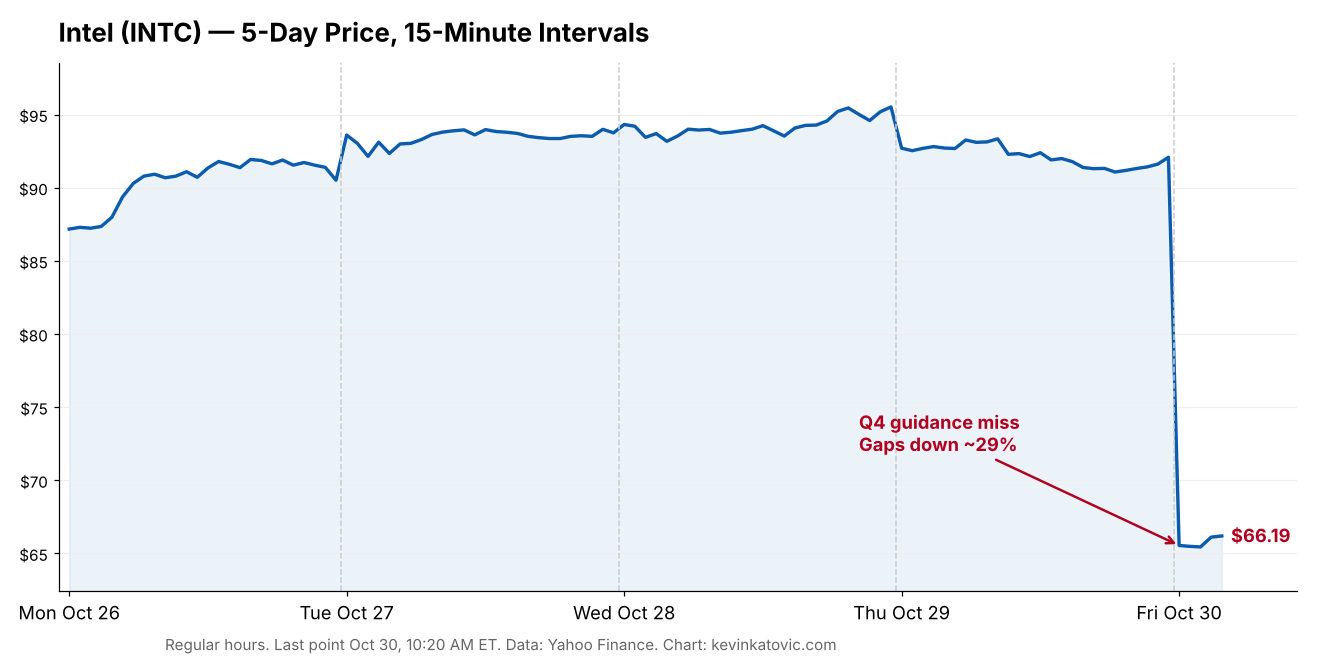
Intel 5-day price, 15-minute intervals, Oct 26–30, 2026. Data: Yahoo Finance.
If you wouldn’t mind please cheat.