
About the animation above: it is a cartoon. The rising price in it is fictional and is not a live BBAI quote. On Monday, October 12, 2026, BBAI closed at $2.30.
BigBear.ai (NYSE: BBAI) said on Tuesday that it has won more than $225 million in contracts since July, adding the FBI and the U.S. Coast Guard as customers. The news landed in a rough week for anything tied to AI: memory-chip stocks lost billions on a report out of China, and Elon Musk weighed in on why.
What BigBear.ai announced
In a press release carried by Yahoo Finance on October 13, 2026, the McLean, Virginia company listed its wins since July:
- More than $225 million in contract awards, new and recompeted.
- More than 25 generative AI awards at the FBI, NASA, the Coast Guard, the Department of Energy and Veterans Affairs.
- Two recompetes kept at U.S. Customs and Border Protection, one with SAIC and one with Unissant.
- New defense and intelligence work for U.S. Central Command, U.S. Southern Command and classified customers.
- AI platforms that give access to several models and agent tools, including on air-gapped networks cut off from the internet.
CEO Kevin McAleenan summed up the pitch in one line: “Technology does not translate into capability without operational insight.” In plain terms, the company is selling itself as the team that knows how agencies actually work, not just another AI model vendor.
What $225 million really means
The headline number deserves a closer look. BigBear.ai counts it as total contract value, which includes option years and spending ceilings that the government may never use. The release says so itself: the figure “does not necessarily reflect funded amounts.”
The better yardstick is backlog. At the end of June, BigBear.ai reported about $270 million in backlog, and only about 29% of it, roughly $78 million, was funded. For scale, second-quarter revenue was $36.7 million. So $225 million in new awards is meaningful for a company this size, but the cash arrives over years, and only if agencies keep exercising their options.
At Monday’s close of $2.30, and using the 479.5 million shares the company reported for the second quarter, the whole company was valued at roughly $1.1 billion. The market is clearly waiting to see these awards turn into revenue before paying up. I walked through the full numbers, including what it would take to reach $5, in BigBear.ai Stock (BBAI): Is It Worth $5 a Share? There is also a longer breakdown with charts on Strategic Crypto Reserve’s BBAI page.
The customer list matters more than the dollar figure
New logos are the part of this release that should get attention. The FBI and the Coast Guard are first-time customers. Keeping two CBP recompetes, on two different teams, says the agency is happy with the work. And classified intelligence awards are hard to win and harder to lose once a contractor is cleared and embedded.
The air-gapped angle matters too. Many defense and intelligence networks cannot touch the public internet, so the big cloud chatbots are not an option. A company that can run several AI models inside a sealed network is solving a real problem that the large AI labs mostly ignore.
Why chip stocks are getting drilled on news out of China
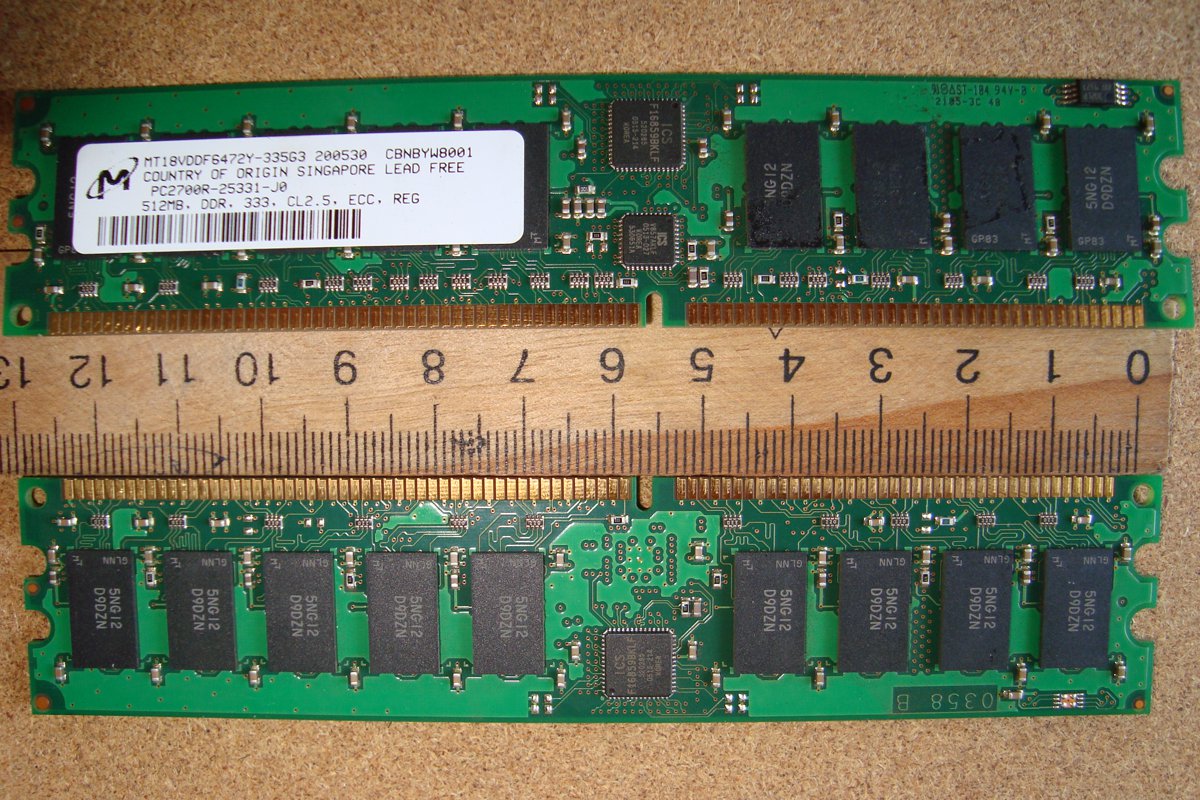
The same Monday, memory-chip makers took a beating. Over the weekend, the president of China’s CXMT (ChangXin Memory Technologies), Cao Kanyu, said at an event in Shanghai that the company had made “key progress” on a new memory cell architecture and planned products based on it by the end of the year. Investors read that as a threat to memory prices, which have been sky-high thanks to AI demand.
According to Yahoo Finance, Micron fell 3.8% on Monday and SanDisk lost 5.9%, with both down again before Tuesday’s open. AOL reported that the selloff erased about $108 billion in combined value from Micron, SK Hynix and SanDisk. Micron closed Monday at $989.04.
Elon Musk explained the fear on X better than most analysts. “When China figures out how to manufacture a product,” he wrote, “their ability to scale is often greater than the rest of the world combined.” Think lithium batteries and solar panels: once China cracked them, prices collapsed worldwide.
He offered his own company as the exception: “SpaceX is a rare counter-example, where its mass to orbit is roughly an order of magnitude greater than the rest of the world, BUT China now does the majority of non-SpaceX mass to orbit.” Then came the line aimed at memory investors: “Maybe RAM will be different, but RAM was a low margin commodity only ~3 years ago.”
Musk did leave the bulls some room. “LP5 and LP6 are designed to a common standard that China seems to be solving fast,” he wrote, referring to the low-power memory used in phones and laptops. The stacked high-bandwidth memory that feeds AI chips is a much harder problem, and that is where Micron and SK Hynix earn their best margins. The question for investors is how long that lead lasts.
What it means for BigBear.ai
BigBear.ai does not make chips, so CXMT is not a competitor. But the stock still slipped about 3.8% on Monday, almost exactly in step with Micron, because traders were selling the AI theme as a whole.
Look past the mood and the two stories point in different directions. If China does push memory prices down over time, the cost of running AI systems falls, and that helps companies that deploy AI rather than build the hardware. And BigBear.ai’s revenue depends on federal budgets and contract options, not on memory prices.
The risks are real, though. The company is still losing money, government contracts can be cut or delayed, and the funded part of the backlog is small. The next quarterly report, due later this month, is the place to check whether these awards are turning into revenue.
Frequently asked questions
How much did BigBear.ai win in new contracts?
BigBear.ai says it secured more than $225 million in contract awards since July 2026, counting new wins and recompetes. That figure is total contract value, which includes unexercised options and ceilings, so it is not all funded money.
Which new customers did BigBear.ai add?
The company named the FBI and the U.S. Coast Guard as new customers, kept two recompetes at U.S. Customs and Border Protection, and added work for U.S. Central Command, U.S. Southern Command and classified intelligence customers.
Why did chip stocks fall on news out of China?
China’s CXMT said it made key progress on a new memory cell architecture and plans products by year-end. Investors worried that Chinese competition could cut memory prices. Elon Musk said that once China learns to make a product it can usually out-scale the rest of the world, though advanced memory may be harder.
Does the China memory news hurt BigBear.ai?
Not directly. BigBear.ai sells AI software and services to government agencies and does not make memory chips. Its stock fell about 3.8% on Monday along with the wider AI trade, but its contracts depend on federal budgets, not on memory prices.
Disclosure: The author holds a financial interest and an active position in BigBear.ai (BBAI), and may add to it if the stock reaches $5. Any position may change at any time without notice. This post is opinion and general information, not investment advice and not an offer to buy or sell any security.
Sources: BigBear.ai press release via Yahoo Finance (October 13, 2026); Yahoo Finance, “Elon Musk explains why chip stocks are getting drilled on news out of China” (October 13, 2026); AOL. Closing prices for October 12, 2026: Alpha Vantage. Cover photo: Jakub Hałun, Wikimedia Commons, CC BY 4.0 (cropped).