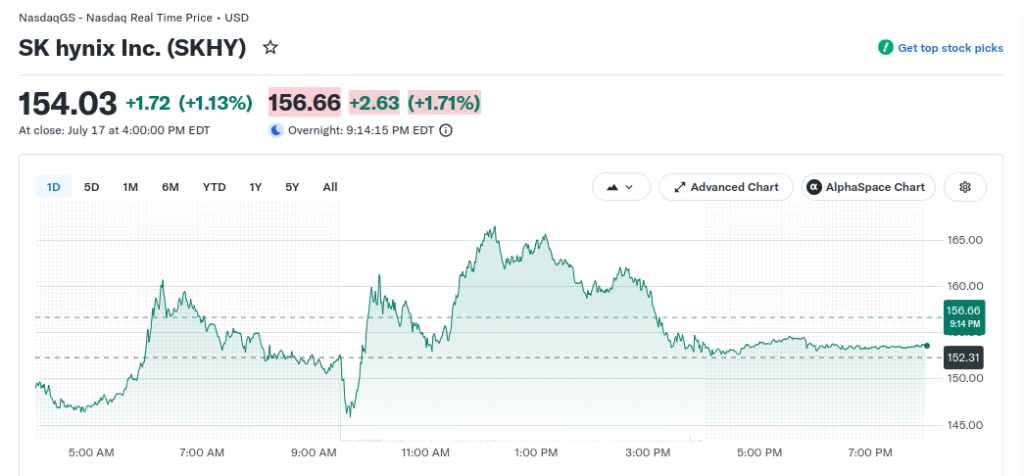
 The chip sector is on the heels of a sharp ~20% pullback from its late June highs, bringing the PHLX Semiconductor Index (SOX) right to the edge of an official technical bear market.
While the sentiment heading into the weekend felt heavy due to a paradoxical selloff following TSMC’s earnings, the structural ingredients for a Monday morning relief rally are highly visible.
Market pullbacks often overshoot to the downside before reversing violently. The technical indicators suggest a short-term bottom is forming:
-
Oversold Relative Strength Index (RSI): The 14-day RSI for the iShares Semiconductor ETF (SOXX) has plummeted to 36.25. Historically, an RSI approaching the low 30s indicates extreme near-term selling fatigue, often preceding a sharp, algorithmic dip-buying response.
-
Major Support Levels: The sector is hovering near key psychological support zones. After giving back its spring gains to broader market rotation, long-term moving averages are acting as magnets for structural buyers who have been waiting for a more favorable risk-reward entry point into AI infrastructure leaders.
2. The Delayed Digestion of TSMC’s Massive Capex Boost
On Thursday, Taiwan Semiconductor Manufacturing Co. (TSMC) reported a spectacular 77% surge in Q2 profits and fundamentally raised its full-year capital expenditure (capex) outlook to a massive $60 billion to $64 billion.
| Metric | Previous Expectations | New Reality | Market Implication |
| TSMC Capex Budget | $52B – $56B | $60B – $64B | Guarantees downstream revenue for equipment makers (ASML, Applied Materials). |
| 2026 Revenue Growth | ~20% – 25% | >30% U.S. Dollar Growth | Proves the AI and High-Performance Computing (HPC) boom isn’t slowing down. |
The Rally Case: Friday’s selloff was triggered by knee-jerk anxieties over near-term free cash flow compression due to these higher costs. Over the weekend, institutional desks typically re-model these figures to focus on the macro reality: TSMC is spending more because their order books are overflowing. When the opening bell rings, the narrative can easily flip from “high costs” to “undeniable product demand.”
3. Front-Running the “Hyperscaler” Reassurance
The primary anxiety haunting the chip sector is whether the “Magnificent Seven” cloud hyperscalers (Microsoft, Alphabet, Meta, Amazon) will keep spending aggressively on AI data centers.
With Alphabet (GOOGL) and Tesla (TSLA) scheduled to kick off tech earnings on Wednesday, July 22, Monday morning represents the final window for traders to position themselves ahead of the news. Historically, buyers front-run these earnings cycles on the expectation that tech giants will reaffirm massive, multi-billion-dollar AI capital expenditure budgets.
4. Nvidia & Product Pipeline Clarity
Nvidia (NVDA) has borne the brunt of the recent consolidation, but the underlying fundamentals remain highly defensive:
-
No Architecture Delays: CEO Jensen Huang officially dispelled rumors of a “Vera Rubin” next-gen chip delay from Tokyo, confirming that production is moving forward at scale.
-
New Commercial Channels: Nvidia just locked in major infrastructure deals in Japan, including a national Physical AI project requiring 27,500 Rubin GPUs.
he fundamental thesis for semiconductors hasn’t changed, but the valuations have significantly reset. A combination of deeply oversold technicals, an upgraded TSMC demand signal, and pre-earnings positioning could easily catalyze a strong, green open for the chip sector on Monday morning.